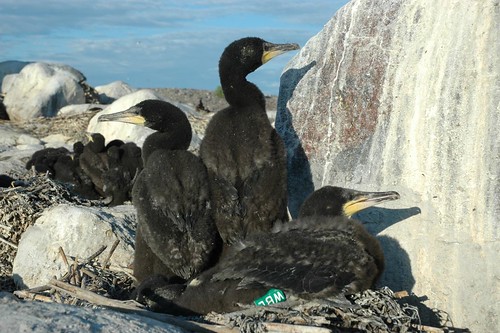
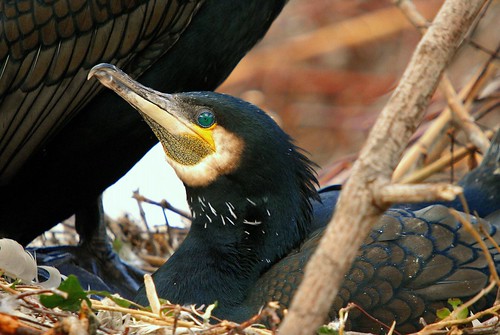
Our third paperblog covers cormorants, insect herbivores, England's largest lake, natural capital and water chemistry. (For those who want to know more about our paperblog concept, take a look at
paperblog #1 published on 21 June).
CEH PhD student Scott McKenzie has a new paper in the Royal Society's
Biology Letters, showing how two insect herbivores, an above-ground aphid and a below-ground vine weevil, may benefit in the presence of one another. According to the publishers, "This is known as feeding facilitation and is rare in nature." Read more in the paper, "
Reciprocal feeding facilitation between above- and below-ground herbivores".
Dr Chris Huntingford and Dr Lindsay Banin were co-authors on two of the papers in the recent special issue of
Philosophical Transactions of the Royal Society B which looked at
change in African rainforests, past, present and future. Many of the papers in the issue are open access.
CEH's lake ecology scientists have published a paper in
Global Change Biology on food web de-synchronisation in England's largest lake, Windermere.
Read the paper here.
Professor Rosie Hails, CEH's Science Director for Biodiversity and Ecosystem Science, worked with Professor Steve Ormerod of Cardiff University on an editorial for the
Journal of Applied Ecology. The editorial, "
Ecological science for ecosystem services and the stewardship of Natural Capital", introduced five papers in a Special Profile showing how ecologists in the UK are contributing nationally and internationally to these issues, stemming from the UK National Ecosystem Assessment - the first ever national scale exercise of its type in the world.
Dr Steven Cole of CEH and colleagues from NERC's British Geological Survey have published a new paper in the
Journal of Hydrology. The paper uses a novel application of CEH's G2G model combined with geochemical sampling to
understand macronutrient fluxes across a catchment.
Staying with catchment water chemistry, CEH Fellow Professor Colin Neal and long-time collaborator Professor Jim Kirchner have published a summary of their work on universal fractal scaling in stream chemistry and its implications for solute transport and water quality trend detection.
It can be found in PNAS.
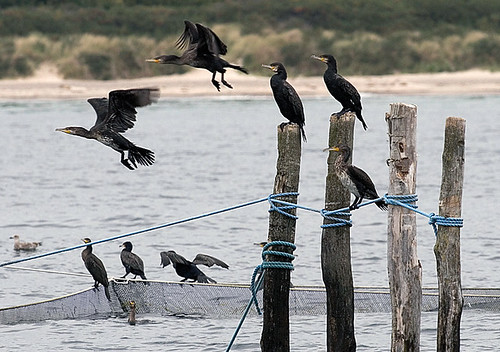
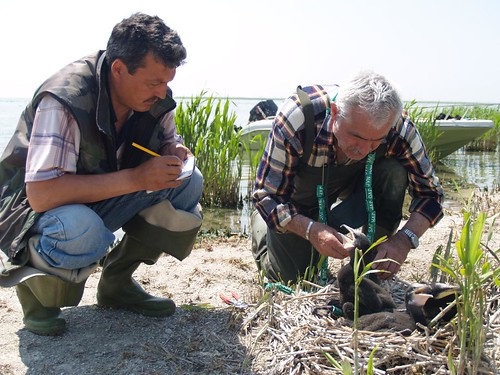
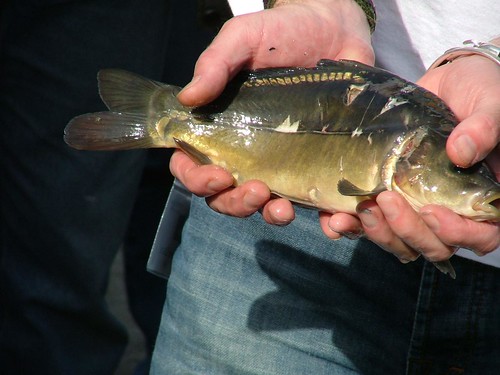
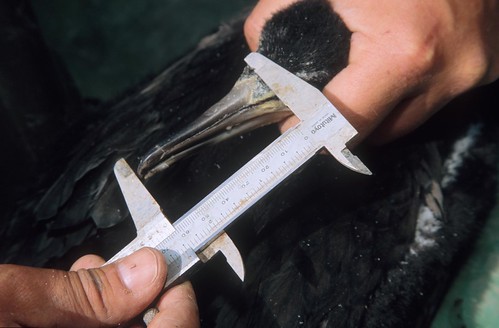
And finally, in the next few months the final outputs from the EU-funded Intercafe project - which aimed to improve European scientific knowledge of cormorant-fisheries interactions - will be made available. Dr David Carss, who led the Intercafe project, has a lead-author paper, "
Managing European cormorant-fisheries conflicts: problems, practicalities and policy" in the journal
Fisheries Management and Ecology which previews some of the work.
As always, we're very interested in your feedback, so please let us know what you think, and any improvements that could be made, by commenting on the blog or emailing us via
enquiries@ceh.ac.uk.
That's it for now, more in a couple of weeks!
Barnaby Smith - CEH Media Relations Manager
Additional information
If you'd like a fuller picture of new papers from CEH, just follow the
@CEHPaperAlerts Twitter feed, which lists CEH peer-reviewed papers newly published online. Full details of Centre for Ecology & Hydrology science publications, including those published in peer-reviewed science journals, are eventually catalogued on the
NERC Open Research Archive (NORA).
Those of you who follow the scientific literature will know some journal websites require registration and some are subscription-only. CEH, as part of NERC, is working with publishers and funders to make more of our output open access, and we'll be indicating where this is the case.
We also publish lots of other outputs including biological records atlases and project reports. More details can be found on the publications page of our website.