Showing posts with label wetlands. Show all posts

Friday, 28 February 2014

Natural Capital science at CEH

We're delivering our new Science Strategy (2014-19) through a number of Science Areas and underpinning activities. Find out more about each area as we profile them over the coming weeks in a series of blog posts.

This post focuses on our Natural Capital Science Area, headed by Professor Mike Acreman.


Soil, insect pollination, water, food, nutrient cycling, flood control etc - we rely on goods and services provided by the natural environment. The concept of natural capital as the stock of environmental assets will inform decisions on how we use our natural resources and manage the environment sustainably.

Wetlands, such as this blanket bog on the Isle of Harris, provide essential ecosystem
functions and services, including regulation of water quality, sustainable control and
mitigation of flooding, greenhouse gas reduction, essential habitats for plants and
animals, and cultural and recreational facilities.

CEH carries out a wide range of research into wetlands in the UK and overseas.


CEH has unrivalled and longstanding expertise in the science of the natural environment that underpins natural capital. We'll use surveys, experiments, analysis and modelling to produce detailed knowledge of water, soils, plants, animals and atmosphere provided by the UK environment.


Research objectives in this Science Area include assessing the extent, quality, trends and vulnerability of the UK's natural capital. We also define ecosystem services that flow from the natural and managed environment, quantifying short and long-term trends and natural variations.


We'll also work with other experts in economics, health and sociology, to evaluate the benefits of natural capital to human well-being, how to balance exploitation with protection and where to target management and restoration efforts. For example, we are a partner member of the Natural Capital Initiative.


Long-term monitoring helps us record how natural capital is changing and identify the causes of change. For example, CEH coordinates the UK Environmental Change Network, and operates the UK Butterfly Monitoring Scheme in partnership with Butterfly Conservation and the Joint Nature Conservation Committee.


More details of our Natural Capital Science Area, including a Science Area Summary [PDF], are available on our website.

Additional information


CEH Science Strategy

Wednesday, 25 September 2013

Cormorant-fishery conflicts: photos from the INTERCAFE project

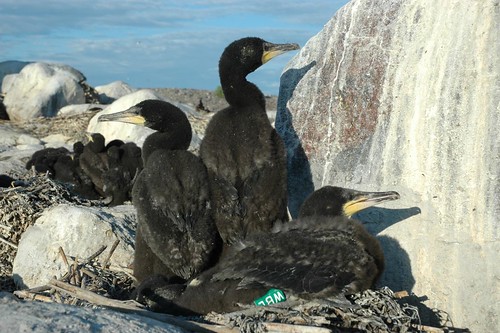
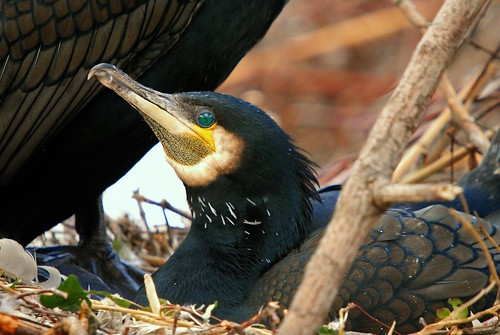
Findings from a major Europe-wide study into cormorant-fishery conflicts have been published, providing one of the most detailed ecological and socio-economic investigations of these fish-eating birds, their impacts and implications for their management. Read more in CEH news and view photos from the project below.

The INTERCAFE study, chaired by David Carss of CEH, included the first
pan-European census of the number and distribution of cormorants in summer
and wintertime. Cormorant numbers across Europe have been increasing,
particularly within the last three decades.
Photo: INTERCAFE
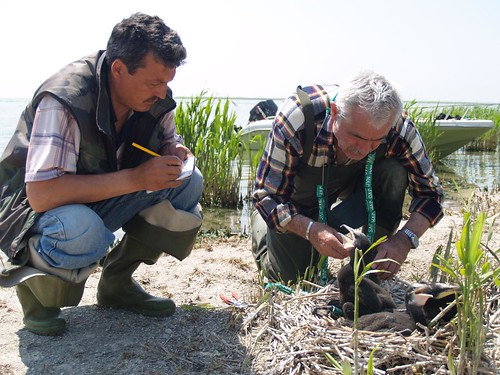
Researchers carry out an INTERCAFE field survey (c) INTERCAFE. The
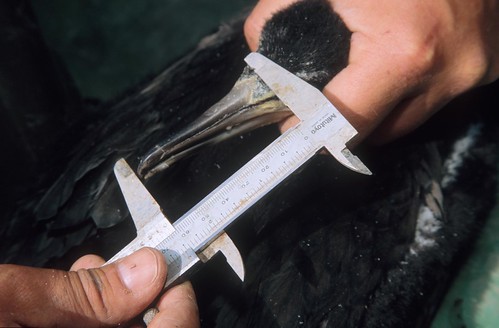
INTERCAFE reports include an overview of field techniques and standard
research methods for cormorants, fishes and the interactions between them.
Photo: INTERCAFE

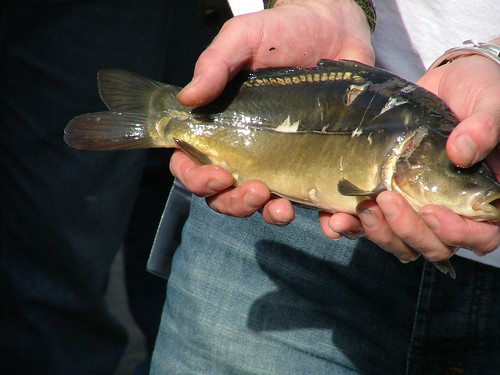
A carp damaged by a cormorant. The INTERCAFE reports contain analysis
of cormorant-fisheries conflicts at carp-rearing ponds - an important freshwater
fishery sector across continental Europe - where problems at individual sites
can be caused by birds which breed as far as 2000km away.
Photo by Robert Gwiazda
The project drew together researchers from a number of disciplines, including
bird-related and broader ecology disciplines, fisheries science and management,
sociology, social anthropology and international law, together with experts on
fisheries production, harvest and management, local interest groups and
international policy-makers.
Photo: INTERCAFE
The project involved 70 researchers from 30 countries, as well as hundreds
of volunteers of the Wetlands International-IUCN Cormorant Research Group.
Photo by Stef van Rijn.
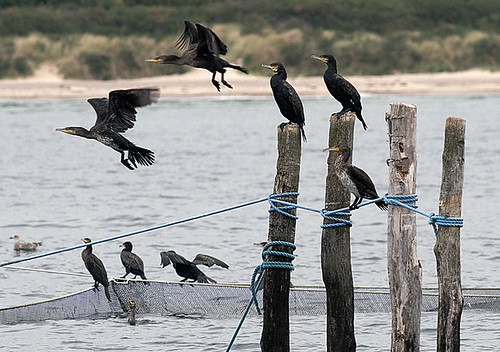
Photo of a cormorant by Josef Trauttmansdorff


More information


CEH News: Europe-wide studies into cormorant-fishery conflicts published

INTERCAFE reports

Flickr set of photos from INTERCAFE project

Friday, 1 February 2013

Taking care of water

World Wetlands Day, which occurs annually on 2 February, is taking the theme this year of Wetlands and Water Management, focusing  on how wetlands take care of water quality. 

The UK has many different types of wetlands, including floodplains, fens, lake systems, wet grasslands and bogs. Scotland, for example, has more than 10,500sq km of blanket bog, where hydrology is controlled largely by rainfall and evaporation. There are at least 392,000 ha of fen, reedbed, lowland raised bog and grazing marsh, although the true extent is uncertain, and there are 963,700 ha of floodplains (figures from the UK National Ecosystem Assessment).

In UK wetlands alone, more than 3500 species of invertebrates, 150 aquatic plants, 22 ducks and 39 wader species occur, while all seven of our native amphibians depend on wetlands for breeding.

Wetlands provide many ecosystem functions, including the regulation of water quality, for example by acting as a natural buffer zone and breaking down animal waste and contaminants in runoff.

CEH carries out research towards understanding the processes at work in different wetlands and helps to provide advice on how to manage them. We use our specialist skills in hydro-ecological modelling, field-data collection and monitoring in many wetland projects, from the well known and large-scale Great Fen restoration project to smaller studies, for example investigating eco-hydrological conditions at particular sites.

CEH has been involved in ecohydrological investigations at
Braunton Burrows in North Devon


Globally, CEH scientists advise the International Convention on Wetlands (Ramsar) and the wetlands programme of IUCN - The World Conservation Union.

CEH scientists also work on coastal wetlands. Recently staff have published three new scientific papers on salt marshes and dune slacks:
Another research paper published in Nature on 30 January, which was led by the Open University and featured CEH, looked at globally important tropical wetlands and carbon loss.

Wetland sites are great for nature spotting. Given our recent rainy weather, if you are out and about at a UK wetlands site over the weekend, try to stay dry! Any photos you might take are very welcome to be added to our Wetlands in the UK Flickr group.

Additional information


More information on CEH's wetlands work can be found on our Why Study Wetlands web pages

Each year the 2nd February is designated as World Wetlands Day, marking the date of the adoption of the Convention on Wetlands in 1971, which occurred in the small Iranian city of Ramsar. Additionally 2013 has also been designated as the UN’s International Year of Water Cooperation, in recognition of the fact that water is critical for sustainable development and for human health and well-being.

Explaining more about this year's World Wetlands Day theme, the Ramsar Convention has produced an illustrated leaflet entitled "Wetlands Take Care of Water".

UK National Ecosystem Assessment

Tuesday, 10 April 2012

Shelducks on Doxey Marshes

Shelducks on Doxey Marshes by AndyStraw
Shelducks on Doxey Marshes, a photo by AndyStraw on Flickr.
Many thanks to those of you who have added photos to our "Wetlands in the UK" group on Flickr. A few contributors have been busy over the Easter holiday period: images added in the last week include shots of shelducks, moorhens and egrets.

The group is a place to share photos taken at any wetlands site in the UK, particularly photos of the species that depend on and thrive on those sites. Photographs of birds definitely predominate at the moment! Why not browse through the images and consider adding any of your own that are relevant.

Thursday, 2 February 2012

Celebrating World Wetlands Day!

Each year the 2nd February is designated as World Wetlands Day, marking the date of the adoption of the Convention on Wetlands on 2 February 1971, which occurred in the small Iranian city of Ramsar. By the way the city's other claim to fame (according to Wikipedia!) is for having the highest levels of natural background radiation on Earth.

Wetlands provide essential ecosystem functions and services, including regulation of water quality, sustainable control and mitigation of flooding, greenhouse gas reduction, essential habitats for plants and animals, and cultural and recreational facilities. In recent years many organisations have run events on World Wetlands Day to raise public awareness of wetland values and benefits in general, and the Ramsar Convention in particular.

The focus for this year’s World Wetlands Day is "wetlands and tourism", an issue of great importance in the UK where many of our wetland conservation areas, including the Norfolk Broads, the Somerset Levels and Moors, and the Great Fen, are visited by tens of thousands of tourists each year.
  
CEH scientists are working in the Somerset
Levels and Moors
CEH scientists have ongoing projects in several UK wetland areas including the Somerset Levels and the Great Fen Project, where we use our specialist skills in hydro-ecological modelling, field-data collection and monitoring to provide advice to organisations attempting large-scale wetland restoration.

For World Wetlands Day this year CEH has created a new web-based tool to help wetland managers in England and Wales project the impacts of climate change in the next 50 years. The project, led by Professor Mike Acreman, brings together the best available science, presenting results in an easy to use form showing how future climate could impact on different types of wetlands. Professor Acreman hopes that, in future, the methods developed can be extended to assessing impacts in other countries.

A number of wetlands sites up and down the UK are hosting special events this weekend to mark World Wetlands Day, so it's a great opportunity to get out and visit one! It's also a good time of year to witness one of nature's most magnificent sights, a murmuration of starlings - when they sweep through the sky in their thousands, sometimes hundreds of thousands, before flying down and roosting in the trees. Wetlands reserves are renowned places to see them.

Why not take your camera when you are out and about at a wetlands site this weekend, and add your photos to our Wetlands in the UK Flickr group.


Posted by Barnaby and Paulette