Showing posts with label recording. Show all posts

Monday, 18 August 2014

A weekend at Birdfair

CEH's Biological Records Centre (BRC) teamed up with the Botanical Society of Britain and Ireland (BSBI) this weekend (15-17 August 2014) to co-host a stand at the hugely popular Birdfair annual event at Rutland. Birdfair attracts more than 20,000 wildlife enthusiasts of all ages and from many different countries and was an ideal venue to encourage more people to record their wildlife sightings. Records submitted through BRC's apps and iRecord website are used in research by CEH scientists and colleagues.


Visitors were able to see how easy it is to use BRC's range of recording apps, such as iRecord Ladybirds and iRecord Butterflies (and get an exciting sneak preview of the forthcoming grasshopper app!). It was also great to see interest in the forthcoming National Plant Monitoring Scheme, which involves both CEH and BSBI. 

A number of CEH scientists were in attendance to chat about their work and about the importance of recording wildlife...


...as well as enjoy the efforts of our stand partners...


...and discover some of the other great research and volunteer efforts being highlighted at the show...


Thanks to everyone who took the time to pop by and have a chat! We hope you had a great show and continue to enjoy viewing (and recording!) wildlife.


There's an app for that...


Related links


Smartphone apps for citizen science and environmental recording

When and how to use citizen science: best practice guides from CEH

Posted by Paulette Burns, Media Coordinator

Friday, 11 April 2014

New iRecord Butterflies app available

The iRecord Butterflies app is available
for iOS and Android
Updated 13 April 2014

It's been a big week for butterflies. As reported on this blog on Wednesday the UK Butterfly Monitoring Scheme 2013 data was released a few days ago. Today the new iRecord Butterflies app is available from iTunes and the Google store.

The new app, which is free to download, guides you through the identification of any butterfly that you see in the UK. You can compare your own photo with those from the app’s extensive image library, filter species by colour, pattern and size, and see distribution maps and identification tips for each butterfly species.

I've been testing the app over the last few weeks (my most recent record a Small tortoiseshell spotted in the lane next to work on Wednesday...see the photo evidence below) and can confirm it's very easy to use. It's a fantastic addition to the iRecord app range which includes Ladybirds (launched last year) and the forthcoming Orthoptera (Grasshoppers and Crickets) app.

The main advantage of the iRecord apps over other similar products is that it provides a direct way of submitting data to the national butterfly recording schemes run by Butterfly Conservation, the Centre for Ecology & Hydrology and the British Trust for Ornithology.

Every record you make with the app will help provide, in the words of Richard Fox of Butterfly Conservation, "The essential foundation for much-needed conservation work to help the UK’s declining butterflies."

Small Tortoiseshell sighting added to the iRecord Butterflies app

Many people have had a hand in the app's development including staff at Butterfly Conservation, scientists working within the Biological Records Centre (BRC) at the Centre for Ecology & Hydrology (CEH), and the developer team at Nature Locator and Natural Apptitude. CEH provided funding for the project and have linked it to the iRecord system for sharing wildlife observations, developed by Biodiverse IT and the BRC.

Tomorrow is the weekend and it's forecast to be sunny in many areas of the UK, fantastic conditions for recording butterflies. Download iRecord butterflies now and give it a try!

Barnaby Smith

Update 1 - 13 April 2014

It's 6pm at the end of the first weekend since the iRecord Butterlies app went on general release. I've just glanced at the Butterfly App Info Centre on the iRecord website. In just over 48 hours 774 records of 20 species have been submitted and numbers are increasing every time I check. Great work by all of you who've been out recording over the last two days. 80 photos have accompanied these sightings.

However...team 'Butterfly' still have some way to go to get past the Ladybird recorders. Since the iRecord Ladybirds App was launched last year 6720 records of 31 species have been submitted, plus a fantastic total of 5013 photos (approximately 3 photos for every 4 records). More details are on the Ladybird App Info Centre.

One preliminary conclusion? It may be easier to photograph a ladybird than a butterfly!

Good luck with your recording!


Additional information


The new iRecord Butterflies app is available from iTunes and the Google store

Butterfly Conservation - Butterfly recording gets smart

iRecord website

Biological Records Centre at CEH

Thursday, 3 October 2013

Hydrometric data: The Long View

Each week BBC Radio 4's The Long View uses a variety of expert witnesses to examine stories from history that resonate in today's headlines.

Later this month, CEH will host more than 100 distinguished hydrologists who will spend a day taking the 'long view' of the data collection and research work of the UK's National River Flow Archive (NRFA) and National Groundwater Level Archive (NGLA), both of which have been hosted at our Wallingford site since the early 1980s, but which contain records dating back to the first half of the 19th century.

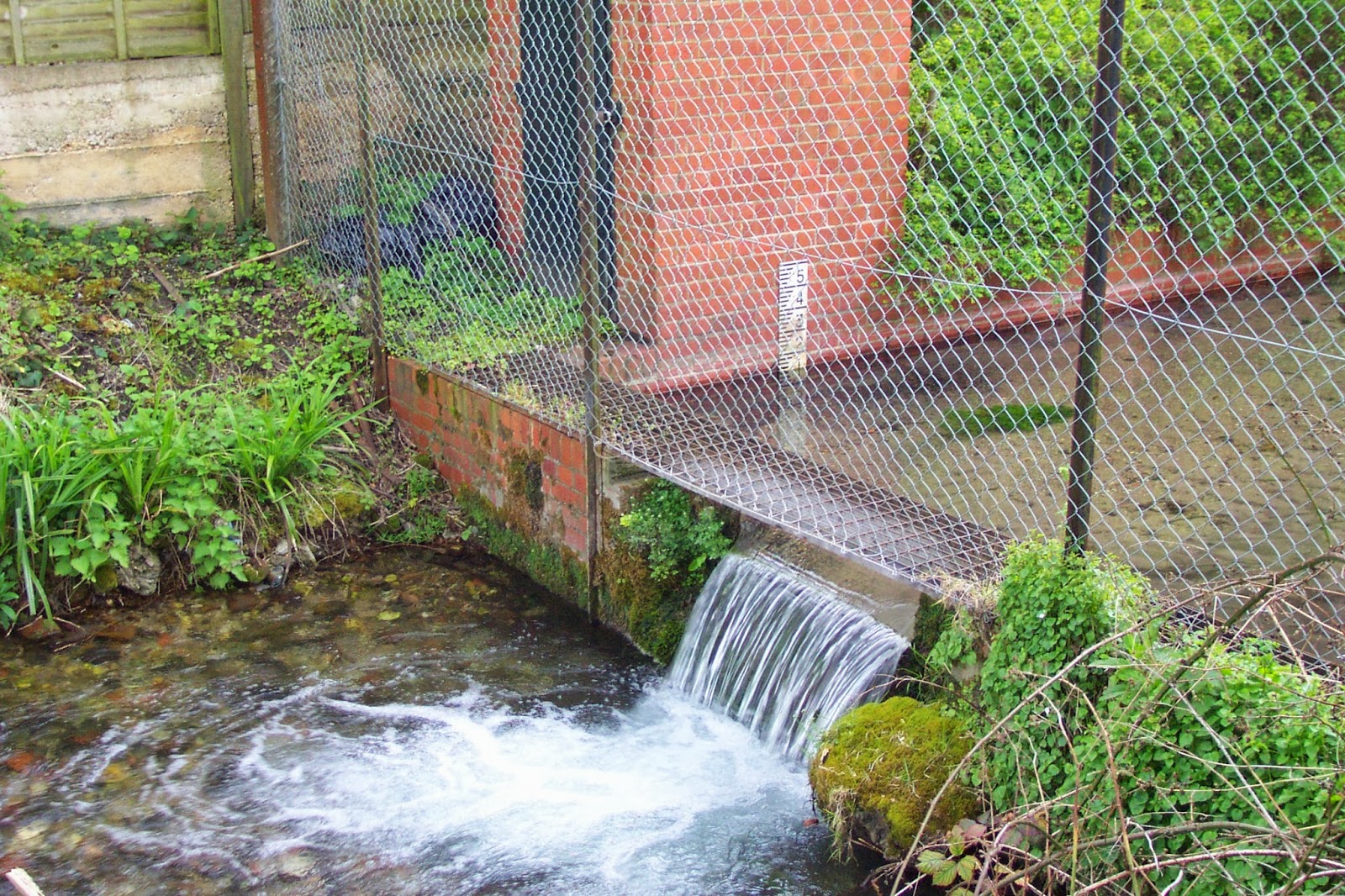
Wendover Springs - thought to be the earliest extant stream flow monitoring
site in the UK. 


The 30th anniversary celebration of the Wallingford move, to be held on 22 October 2013, will review the achievements of the archives and the exploitation of this rich hydrological data resource by a broad user community, which includes regulators such as the Environment Agency, water companies, academic scientists, and environmental and engineering consultancies. The data has also made its way into several scientific papers referred to in the recent IPCC WG1 assessment.

In addition to river flow and groundwater level data, rainfall records and reservoir levels are also held in the archives and the incredible dataset has allowed CEH and BGS scientists to produce a variety of key publications examining both hydrological trends – for example, Are UK floods getting larger? – and the significance of one-off events, such as the 1976 drought. Comparisons between the latest data and the historic record also provide the backbone of the UK's monthly hydrological summary.

Whilst delving through the archives in preparation for this post, I came across this fascinating history of hydrological monitoring before 1985 [PDF], which details how, although Britain has a three centuries-long history of rainfall recording, river flow monitoring only became 'fashionable' after the second world war as industry and government increased their demand for water. The work to establish a national river flow gauging network in the 1950s and 1960s built on a small number of sites that had been established over the previous century, including Wendover Springs in Buckinghamshire - thought to be the earliest extant stream flow monitoring site in the UK.

On the day itself, presenters will look back at how hydrometric monitoring developed in the UK, in response to factors such as the perceived increase in water requirements. They will also examine some of the latest techniques for both monitoring the UK's water cycle, investigate how monitoring and the archive might develop in the future, and tackle the difficult question of what data should we be archiving nationally, given the resource constraints imposed by the current financial situation. In summary, they will take a 'Long View' of a data archive from one of the UK's major environmental monitoring networks, an archive which is particularly important because the UK climate is inherently variable, so short-term tendencies may well not be indicative of long-term trends.

Barnaby Smith

CEH website: Images of gauging stations which have provided some of the oldest records in the archive

Flickr: Album of historic images from the Pynlimon catchments

Additional information


Over the next couple of weeks we will be blogging in more detail about some of the material being presented at the meeting. Further details of the meeting can be found here. Registration is now closed but we will be making much of the content available from this blog and the NRFA pages on the CEH website.

If you're interested in learning more, take a look at the NRFA web pages, where you can find reams of information on how monitoring takes place and how the data is used, and you can also download data for more than 400 of the UK's river flow gauging sites. Information about the records and details of scientific papers which have used the records can be found on the NRFA publications pages.

Thursday, 3 January 2013

Filming at CEH's met site in Wallingford

The recent wet weather means the New Year has got off to a busy start for the CEH Press Office, with several requests from media organisations to interview our hydrologists. On the TV side, Sky, BBC and ITV have all been in touch.

Professor Alan Jenkins of the Centre for Ecology & Hydrology was interviewed on January 2 2013 by Sky News (pictured). He spoke about the dramatic transformation from drought to flood seen in the UK in 2012. The interview took place on the meteorological site at CEH's Wallingford, Oxfordshire headquarters. You can watch the interview on the Sky News website.

David Shukman, the BBC's Science editor, also interviewed Prof Jenkins today, Thursday 3 January, for broadcast later today.

Today, also, the Met Office announced (provisional figures) that 2012 was the second wettest year in the UK national record dating back to 1910, and just a few millimetres short of the record set in 2000. It was the wettest year recorded in England however. Just for interest, the aforementioned CEH met site recorded 820mm of precipitation in 2012, the wettest year in a 51-year series (since 1962).

Update Friday 4 January 2013

What is causing Britain's volatile rainfall patterns? Watch the BBC News video featuring Alan Jenkins of CEH and Andrew McKenzie of British Geological Survey.

The video is also part of the BBC News at Ten broadcast available on iPlayer until later today (4 Jan 2013).

BBC Science Editor David Shukman (right) interviews Prof Alan Jenkins